
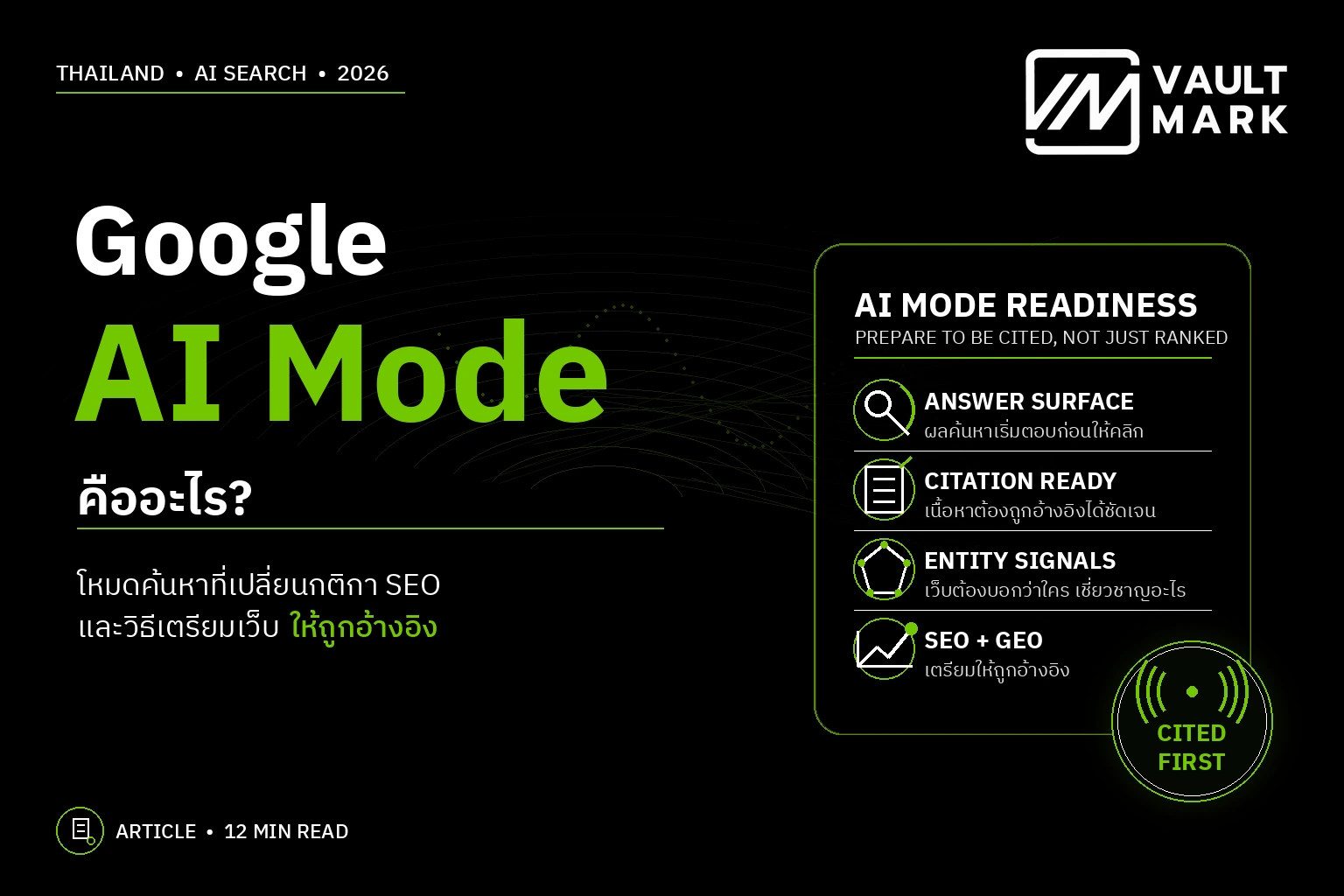
AI Mode คือโหมดค้นหาแบบสนทนาของ Google ที่ตอบคำถามด้วยคำตอบซึ่ง AI ประกอบขึ้นทั้งหน้า แทนการแสดงรายการลิงก์สิบอันดับแบบเดิม ผู้ใช้ถามต่อได้เป็นบทสนทนา และคำตอบแต่ละรอบจะอ้างอิงหน้าเว็บที่ระบบเลือกมาเป็นแหล่งข้อมูล สำหรับธุรกิจ นี่ไม่ใช่ฟีเจอร์เสริม แต่คือหน้าตาใหม่ของสนามที่เคยเรียกว่า “หน้าแรก Google” — และกติกาการถูกมองเห็นในสนามนี้ไม่เหมือนเดิม
AI Mode ต่างจาก AI Overviews อย่างไร
สองอย่างนี้ถูกเรียกปนกันบ่อยที่สุดในวงการตอนนี้ AI Overviews คือกล่องสรุปที่ AI สร้างขึ้นวางไว้เหนือผลค้นหาปกติ ผู้ใช้ยังเห็นรายการลิงก์ด้านล่าง ส่วน AI Mode คือโหมดแยกที่ทั้งหน้าเป็นคำตอบของ AI และเปิดให้ถามต่อเนื่องเหมือนคุยกับผู้ช่วย จุดร่วมคือทั้งคู่เลือกแหล่งอ้างอิงจากหน้าเว็บที่มีตัวตนดีในผลค้นหา จุดต่างที่กระทบธุรกิจคือ AI Mode ตอบคำถามซับซ้อนได้ลึกกว่า และผู้ใช้ที่อยู่ในโหมดนี้มีแนวโน้มจบการตัดสินใจโดยไม่เปิดหน้าเว็บใดเลย ถ้าแบรนด์ของคุณไม่ได้อยู่ในคำตอบ
กลไกที่คนทำเว็บต้องเข้าใจ: AI Mode ไม่ได้ค้นครั้งเดียว
สิ่งที่ทำให้ AI Mode ต่างจากการค้นหาแบบเดิมในเชิงกลไกคือเทคนิคที่ Google เรียกว่า query fan-out — เมื่อผู้ใช้ถามหนึ่งคำถาม ระบบจะแตกคำถามนั้นเป็นคำค้นย่อยหลายชุดพร้อมกัน ค้นแยกกัน แล้วสังเคราะห์ผลทั้งหมดเป็นคำตอบเดียว
ความหมายเชิงกลยุทธ์ของเรื่องนี้ใหญ่มาก: หน้าเว็บของคุณไม่จำเป็นต้องเป็นอันดับ 1 ของคำถามใหญ่ เพื่อจะถูกอ้างอิงใน AI Mode ขอแค่เป็นคำตอบที่ดีที่สุดของ “คำถามย่อย” สักข้อที่ระบบแตกออกมา หน้าที่ตอบคำถามแคบได้ลึกและชัด จึงมีโอกาสถูกอ้างอิงมากกว่าหน้ารวมมิตรที่พูดทุกเรื่องแบบผิวเผิน นี่คือเหตุผลเชิงโครงสร้างว่าทำไมคลังบทความที่แยกตอบทีละคำถามจึงชนะบทความยาวชิ้นเดียวในยุคนี้
เกิดขึ้นจริงในตลาดไทยแล้ว ไม่ใช่เรื่องของอนาคต
จากการตรวจสอบข้อมูลการอ้างอิงของเว็บไซต์ในอุตสาหกรรมการตลาดไทยเมื่อเดือนกรกฎาคม 2026 พบว่าหน้าเว็บภาษาไทยของเอเจนซี่ในไทยถูกอ้างอิงใน AI Mode แล้วรวมกันหลายสิบครั้ง ครอบคลุมหลายสิบหน้า นั่นแปลว่าระบบนี้กำลังตอบคำถามของผู้ใช้ไทยและเลือกแหล่งอ้างอิงภาษาไทยอยู่ทุกวัน ธุรกิจที่รอ “ให้ชัดก่อนค่อยทำ” กำลังยกคำตอบให้คู่แข่งที่ลงมือแล้ว
จากคำที่คุณค้น สู่ปัญหาที่ต้องแก้จริง
คนที่ค้นเรื่อง AI Mode มักมาด้วยคำค้นสองแบบ แบบความรู้ เช่น AI Mode คือ หรือแบบบริการ เช่น รับทำ SEO สำหรับ AI แต่ปัญหาจริงเบื้องหลังมักเป็นข้อใดข้อหนึ่งต่อไปนี้
- ค้นว่า “AI Mode คือ” — ปัญหาจริงมักคือ เห็นหน้าค้นหาเปลี่ยนไป และเริ่มไม่แน่ใจว่ากลยุทธ์ SEO ที่ลงทุนอยู่ยังใช้ได้ไหม
- ค้นว่า “SEO สำหรับ AI Mode” — ปัญหาจริงมักคือ traffic จากการค้นหาลดลง และสงสัยว่าลูกค้าหายไปอยู่ในโหมดค้นหาแบบใหม่หรือเปล่า
- ค้นว่า “AI Mode ทำให้คลิกลดลงไหม” — ปัญหาจริงมักคือ รายงานอันดับยังสวย แต่ยอดสอบถามจากเว็บลดลงจนเห็นชัดในยอดขาย
ทั้งสามอาการชี้ไปที่คำถามเดียวกัน: แบรนด์ของคุณอยู่ในคำตอบของโหมดใหม่นี้หรือยัง และถ้ายัง รั่วอยู่ที่ชั้นไหน — เนื้อหาไม่ถูกเลือก หรือไม่มีตัวตนให้ระบบรู้จักตั้งแต่แรก
3 สิ่งที่ต้องเตรียมเว็บให้พร้อมสำหรับ AI Mode
1. แตกเนื้อหาให้ตรงคำถามย่อย ทำแผนที่ว่าคำถามใหญ่ในหมวดธุรกิจของคุณแตกเป็นคำถามย่อยอะไรได้บ้าง แล้วมีหน้าที่ตอบแต่ละข้อแบบจบในหน้าเดียว โครงสร้างแบบนี้เข้าทาง query fan-out โดยตรง
2. ทำทุกหน้าให้ยกไปใช้ได้ทันที ประโยคนิยามเปิดหัว บล็อกคำตอบสั้นที่สมบูรณ์ในตัวเอง หัวข้อที่ตั้งเป็นคำถามจริงของผู้ใช้ หลักการเดียวกับที่อธิบายไว้ใน AEO คืออะไร และทำไมแบรนด์ที่ไม่ถูก AI อ้างอิงจึงเสียลูกค้าโดยไม่รู้ตัว
3. สร้างตัวตนนอกเว็บควบคู่กัน AI Mode สังเคราะห์จากหลายแหล่ง การถูกพูดถึงในแหล่งภายนอกจึงเพิ่มโอกาสถูกเลือกเช่นเดียวกับระบบ AI อื่น อ่านภาพรวมของเกมชั้นนี้ได้ที่ GEO คืออะไร และต่างจากการทำ SEO แบบเดิมตรงไหน
ขอบเขตของการเตรียมเอง และจุดที่ต้องวินิจฉัยด้วยข้อมูล
สามข้อข้างบนคือฐานที่ทุกธุรกิจควรมี แต่คำถามระดับตัดสินใจ — คำถามย่อยชุดไหนมีมูลค่าที่สุดในหมวดของคุณ ตอนนี้ใครถูกอ้างอิงในคำตอบเหล่านั้น และช่องไหนที่ชิงได้เร็วที่สุด — ต้องตอบด้วยข้อมูลจริงจากการวัดการปรากฏใน AI หลายระบบเทียบกับคู่แข่ง ซึ่งเป็นส่วนหนึ่งของงานวินิจฉัยแบบ Customer Growth Blueprint ที่ออกแบบมาเพื่อให้ธุรกิจเห็นลำดับที่ควรลงมือก่อน ก่อนใช้งบก้อนใหญ่
ขอประเมินความเหมาะสมของ Customer Growth Blueprint สำหรับธุรกิจของคุณ
คำถามที่พบบ่อยเกี่ยวกับ Google AI Mode
AI Mode เปิดใช้ในไทยหรือยัง
ใช้งานได้แล้วและกำลังตอบคำถามภาษาไทยอยู่ทุกวัน ข้อมูลการอ้างอิงล่าสุดในอุตสาหกรรมการตลาดไทยแสดงว่าหน้าเว็บภาษาไทยถูกนำไปใช้เป็นแหล่งอ้างอิงใน AI Mode แล้วจำนวนมาก ธุรกิจไทยจึงควรเตรียมเนื้อหาให้พร้อมตั้งแต่ตอนนี้
AI Mode กับ AI Overviews อันเดียวกันไหม
ไม่ใช่อันเดียวกัน AI Overviews คือกล่องสรุปเหนือผลค้นหาปกติ ส่วน AI Mode คือโหมดแยกที่ทั้งหน้าเป็นบทสนทนากับ AI ทั้งคู่เลือกแหล่งอ้างอิงจากหน้าเว็บ แต่ AI Mode รองรับคำถามซับซ้อนและการถามต่อเนื่องได้มากกว่า
AI Mode จะทำให้คลิกเข้าเว็บลดลงไหม
มีแนวโน้มเช่นนั้นสำหรับคำค้นเชิงหาข้อมูล เพราะผู้ใช้ได้คำตอบครบโดยไม่ต้องเปิดเว็บ สิ่งที่ธุรกิจควรทำคือย้ายเป้าจากการนับคลิกอย่างเดียว ไปสู่การเป็นแบรนด์ที่ถูกอ้างอิงและถูกเอ่ยชื่อในคำตอบ ซึ่งคือจุดที่ลูกค้าจดจำและตามมาหาโดยตรง
ต้องทำอะไรต่างจาก SEO เดิมบ้างถึงจะติดใน AI Mode
ฐาน SEO เดิมยังจำเป็นเพราะระบบเลือกแหล่งจากหน้าที่มีตัวตนดีในผลค้นหา สิ่งที่ต้องเพิ่มคือการแตกเนื้อหาให้ตรงคำถามย่อย การจัดโครงสร้างให้ยกไปใช้ได้ทันที และการสร้างการถูกพูดถึงนอกเว็บ ซึ่งเป็นชุดงานเดียวกับการทำ AEO และ GEO